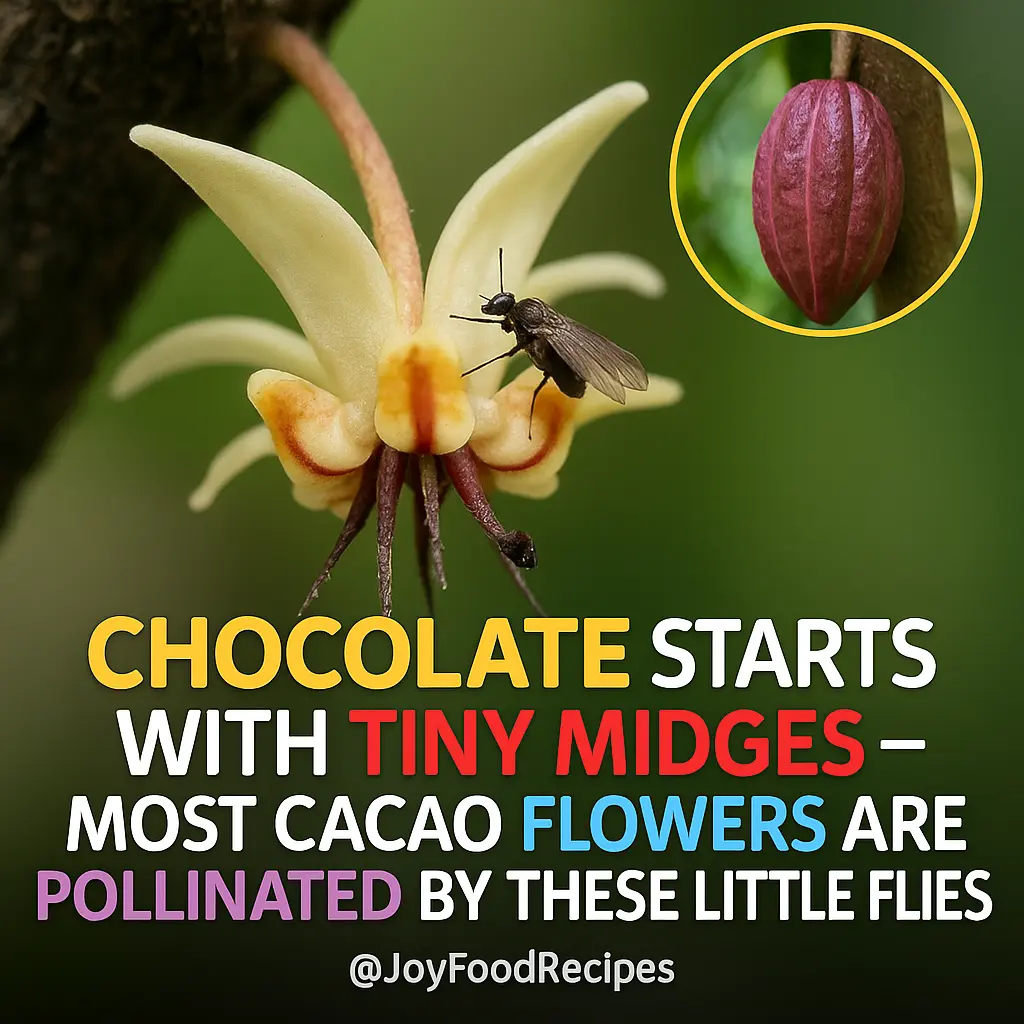
If you love chocolate, you might want to thank a tiny, easily overlooked insect. I’m talking about midges – yes, those teeny-tiny flies most of us would never pay attention to (unless they’re buzzing in our ears). I only found out about them after a friend brought back raw cacao beans from a trip and joked, “You know this stuff doesn’t even exist without a bug, right?”
At first, I laughed. But then I got curious. A bug? Really? So I looked into it. And what I discovered completely changed how I think about chocolate – from the candy aisle to every creamy, rich dessert I’ve ever enjoyed. This article explores how midges help bring chocolate into our lives, what makes them so special, and why their tiny role deserves a bit more of our attention.
What Even Is a Cacao Flower?
Okay, so let’s start at the beginning – because I didn’t know this either.
Cacao (the plant where chocolate comes from) grows these tiny, star-like flowers directly off its trunk and branches. They’re cream-colored with hints of pink or red, and honestly? Kind of beautiful. But they’re also super delicate and tricky when it comes to pollination.
Unlike your average flower that’s ready to party with bees or butterflies, cacao flowers are tiny, have weird shapes, and are open for just a short window of time. So they need a very specific pollinator.
Enter: the midge. These little flies, barely the size of a sesame seed, are one of the only insects small and determined enough to crawl inside and get the job done.
Why Bees Can’t Do It (And Why That’s a Big Deal)
When we think “pollinators,” we usually picture bees. They’re the celebrities of the insect world. But bees are too big for cacao flowers. Even the smallest bees can’t navigate the tight twists and turns inside the flower. It’s like trying to park a truck in a space made for a bike.
Midges, on the other hand, are just the right size. They can sneak in, move around, and accidentally pick up pollen in the process. It’s a clumsy operation, sure – but it works. Without them, cacao trees wouldn’t produce nearly as many pods. And no pods means no chocolate. What’s wild is that most people, even big chocolate fans, don’t know this. But now you do.
Where Midges Live – and What They Like
Let’s talk habitat for a second. Midges love damp, shady, tropical places. That works out pretty well, since cacao trees grow best in rainforests near the equator – places like Ghana, Ecuador, Indonesia, and Brazil.
But here’s the twist: midges aren’t exactly easy to manage. Farmers can’t just order a box of them or set up midge hotels. They need specific conditions to thrive – leaf litter on the ground, moist environments, and no harsh chemicals wiping them out.
That’s why sustainable farming plays such a big role. When farmers preserve parts of the natural forest, the midge population sticks around. But when forests are cleared too much or sprayed too often, midges disappear – and with them, a chunk of chocolate production. It’s one of those behind-the-scenes food facts that really makes you stop and think.
From Flower to Chocolate Bar: The Midge’s Ripple Effect
One tiny midge can kick off a pretty remarkable chain reaction. Here’s how it goes:
- The midge pollinates a flower.
- That flower becomes a cacao pod.
- Inside the pod are beans (which are actually seeds).
- Those beans are fermented, dried, roasted, and ground.
- That ground bean becomes chocolate.
So next time you unwrap a bar or stir cocoa into your milk, just know – you’re enjoying the end result of a tiny fly doing its thing in a humid patch of forest. It makes you appreciate each bite a little more, doesn’t it?
So… Should We Be Worried About Midges Disappearing?
It’s a good question – and one more people are starting to ask.
As farming practices change and the climate shifts, midge populations are under pressure. That could mean less efficient pollination and lower cacao yields. Some growers already hand-pollinate flowers just to be safe (yes, with tiny tools and lots of patience), but that’s expensive and not realistic everywhere.
The good news? There are smart people working on this. Researchers are learning more about what midges like, how they behave, and how farms can support them naturally – like by keeping compost piles, avoiding certain sprays, and letting parts of the forest stay wild.
You don’t have to raise midges in your backyard or anything, but being aware makes a difference.
How You Can Appreciate the Midges Behind the Magic
Here’s the fun part – you can celebrate midges without ever seeing one.
- Try single-origin chocolate. These bars often come from farms that prioritize eco-friendly practices, which helps midges thrive.
- Look for “shade-grown” or “forest-grown” labels. These usually mean the cacao was grown in more natural conditions.
- Share the fact. Most people have no idea midges are the unsung heroes of chocolate. Next time you’re chatting over dessert, drop the knowledge!
It’s the kind of small but meaningful thing that adds a little depth to everyday joy. Like knowing your morning coffee came from a specific mountain range – or in this case, that your chocolate began with a buzz.
Final Thoughts: Small Creatures, Big Flavor
I’ll admit, I never thought much about flies before this. But now? I think of midges every time I bite into a brownie or melt a square of chocolate on my tongue. They may be tiny, but their impact is huge – and sweet.
So the next time you reach for something chocolaty, give a little silent thanks to the midge. Without them, dessert just wouldn’t be the same. And who knows – maybe one day, you’ll pass along this little fact to someone else. That’s how appreciation grows.