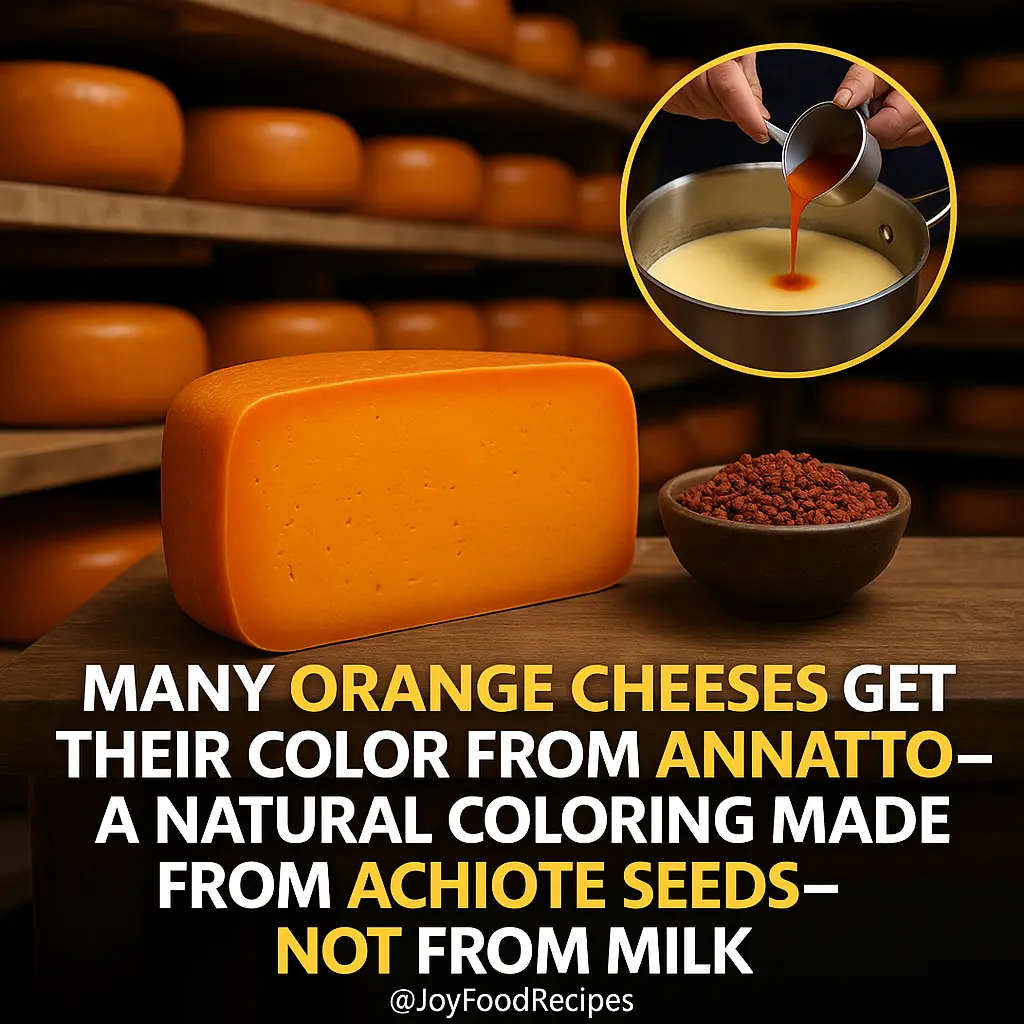
The first time I bought bright orange cheddar for my mother-in-law, she politely asked, “Why is this cheese orange?” I didn’t really have an answer – just shrugged and said, “I guess it’s how it’s made?” But that little moment stuck with me. Because once you stop to think about it… why is cheddar sometimes white, and sometimes deep sunset orange?
Turns out, the answer is surprisingly colorful – literally. And it’s not mainly about flavor or aging – or even what cows are eating. This article explores how a natural plant dye from tropical seeds usually gives some cheeses their signature color, why it started, and what you might notice next time you’re standing in the dairy aisle.
It All Starts With Achiote Seeds
Let’s talk about annatto – a reddish-orange powder or paste made from the seeds of the achiote tree. These seeds grow inside small, spiky pods and have been used for centuries across Latin America and the Caribbean for color, cooking, and even body paint.
When the seeds are crushed and soaked, they release a warm, golden-red tint. It’s not spicy or strong in flavor – just mildly earthy or peppery, depending on how it’s used. So what does that have to do with cheese? A lot, actually.
When added to milk or curds, annatto doesn’t change the taste, but it instantly gives cheese that iconic orange glow. It’s especially common in cheeses like:
- Cheddar
- Colby
- Red Leicester
- Mimolette
If you’ve ever sliced into a block of cheddar and thought, “That’s a bold color,” it was probably the annatto talking.
So… Why Add Color to Cheese at All?
It might surprise you to know that cheese isn’t naturally orange. In fact, most cheeses start out looking white, cream, or pale yellow – depending on the butterfat and how it’s aged.
Long ago in England, cheesemakers noticed that the milk in spring and summer (when cows were grazing on fresh grass and wildflowers) made slightly yellower cheese. That color was seen as a sign of richness and quality. But in winter, the milk turned paler.
Rather than let the cheese look “off-season,” some farmers began adding color to mimic that golden summer look. First they tried carrot juice or marigold petals – then eventually landed on annatto because it was natural, stable, and easy to work with.
It wasn’t about tricking people – it was about keeping the cheese looking consistent year-round. Over time, the orange color became so iconic that customers came to expect it.
Is Orange Cheese Better Than White?
Not really – it’s just a visual thing. The color doesn’t mean the cheese is stronger, sharper, or more flavorful. That depends on the milk, the aging process, and how the cheese is made.
In fact, you might find two blocks of cheddar side by side – one white, one orange – with the exact same taste and texture. The only difference is whether annatto was added.
So if you’re making a cheese board or topping chili, it’s totally up to you. Want a pop of color? Go orange. Prefer a more natural tone? Choose white. Both are real cheese. Both are delicious. There’s no wrong answer.
What About the Seeds Behind the Scenes?
Annatto is more than just “cheese coloring” – it’s a whole ingredient on its own. In cooking, it’s often used in:
- Rice dishes (especially in Latin American and Filipino cuisines)
- Marinades for chicken or fish
- Homemade spice blends
- Butter or oil infusions
You can find it as seeds, powder, or paste in many international or specialty grocery stores. Some home cooks steep the seeds in oil to create a rich orange cooking oil. It’s a fun little ingredient to experiment with – mild, colorful, and versatile.
A Small Detail with a Colorful History
It’s easy to take something like cheese color for granted – until you find out there’s a whole story behind it. That bright orange glow on your grilled cheese sandwich? It came from tropical seeds, historical habits, and a clever solution to winter milk.
So next time you’re slicing cheddar or browsing the cheese section, take a second look. That pop of color might just be annatto doing its subtle touch. And now, you know.