I once brought home a giant bag of tomatoes from the farmers’ market – deep red, juicy, and full of promise. I planned to use them all week. But by day three, they had gone soft and started leaking. I felt awful tossing them out. It got me thinking: how do farmers or street vendors in hot climates keep their fresh produce from spoiling overnight?
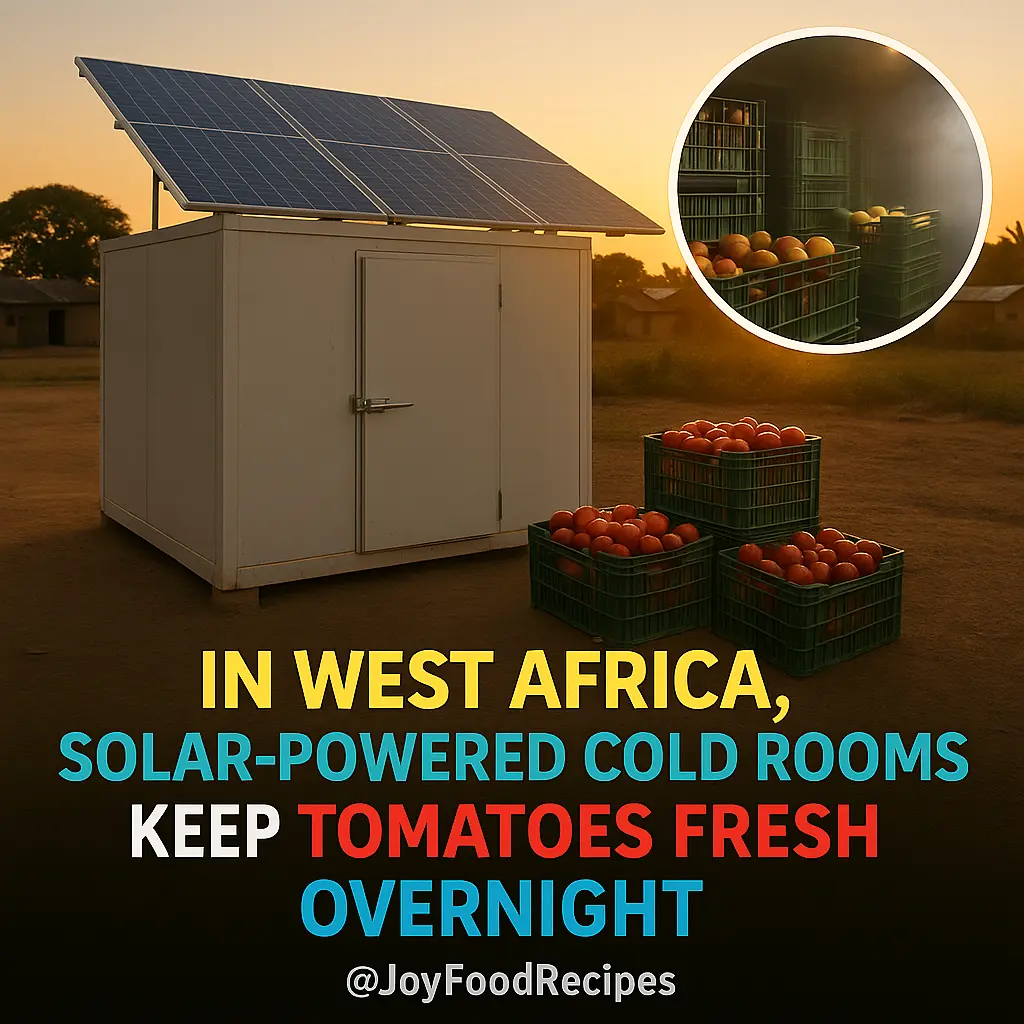
Well, here’s something pretty amazing I learned: in parts of West Africa, people are using the sun to keep their tomatoes cool at night. Sounds like a contradiction, right? But solar-powered cold rooms are changing the way food is stored – and they’re making a real difference for small vendors and local farmers. Let’s explore what this system is, how it works, and why it matters.
1. Why Tomatoes Are Hard to Keep Fresh
Tomatoes are tricky little things. When they’re ripe, they’re perfect – sweet, juicy, and tender. But they can also spoil quickly, especially in places where the temperature doesn’t drop much at night.
In many parts of West Africa, tomato vendors don’t always have electricity or refrigerators. After a long day of selling, they pack up crates of unsold tomatoes and… hope they’ll still be good by morning. But heat, humidity, and time work fast. Even just one spoiled tomato in a crate can cause the rest to soften or mold. That’s not only frustrating – it’s money lost.
2. The Cool Power of Solar Cold Rooms
Now here’s the part that caught my attention: communities are setting up cold rooms powered entirely by the sun. During the day, solar panels collect energy and store it in batteries. Then at night, that power keeps the rooms cool – like a giant walk-in fridge, even without a power grid.
Vendors bring their unsold produce – especially tomatoes – to these shared storage rooms at the end of the day. In the cool air (around 4°C or 39°F), the tomatoes rest easy. The next morning, they’re still fresh and ready to sell. It’s such a simple concept, but such a smart solution. Use the sun’s power while it’s up to help preserve food when it’s down.
3. Street Vendors Are Sleeping Better – Literally
One tomato seller in Nigeria said something that stuck with me: “Before, I stayed up worrying about my tomatoes. Now, I can sleep.”
It’s more than just convenience – it’s peace of mind. When produce lasts longer, vendors don’t have to rush to sell everything in one day or risk spoilage. They also don’t need to slash prices at the end of the day just to move soft tomatoes.
This breathing room makes all the difference. They can plan better, sell at fairer prices, and waste less. That’s more money in their pockets – and less stress in their lives.
4. A Small Room with Big Ripple Effects
These cold rooms don’t just help one person. Usually, they’re shared between many families or vendors. In some areas, farmer co-ops or women-led groups manage them together. That’s community-based food security in action.
Plus, they’re eco-friendly. Instead of running diesel-powered generators or relying on unreliable electricity, the rooms tap into solar energy – a clean, renewable source that’s free once it’s set up.
And get this: the impact goes beyond tomatoes. These rooms are now being used for other crops too – leafy greens, peppers, herbs, even dairy in some places.
5. Could This Work in Other Places?
Absolutely. This idea could help small growers and market sellers anywhere there’s heat, sun, and a need for better storage. Whether it’s rural communities, food deserts, or places recovering from disasters, solar cold rooms offer a way to store food without needing a constant power supply.
Even in the U.S., urban gardens and small-scale farms could look into shared solar chill spaces to keep produce fresh before sale.
A Fresh Way to Think About Food – and Each Other
When we think about food waste, it’s easy to picture overbuying or tossing leftovers. But for so many people around the world, food waste isn’t about choice – it’s about lack of access to cooling.
These solar-powered rooms offer something hopeful: a simple idea that helps people hold onto their harvest, protect their earnings, and reduce waste – all while working with the sun, not against it.
Next time you slice into a firm, sweet tomato, take a moment to appreciate the journey it made. And maybe, just maybe, that journey could be a little easier with the help of a little sunlight and a well-insulated room.
Let’s celebrate solutions that are smart, kind to the planet, and good for everyone.
Because when food stays fresh, so do possibilities.