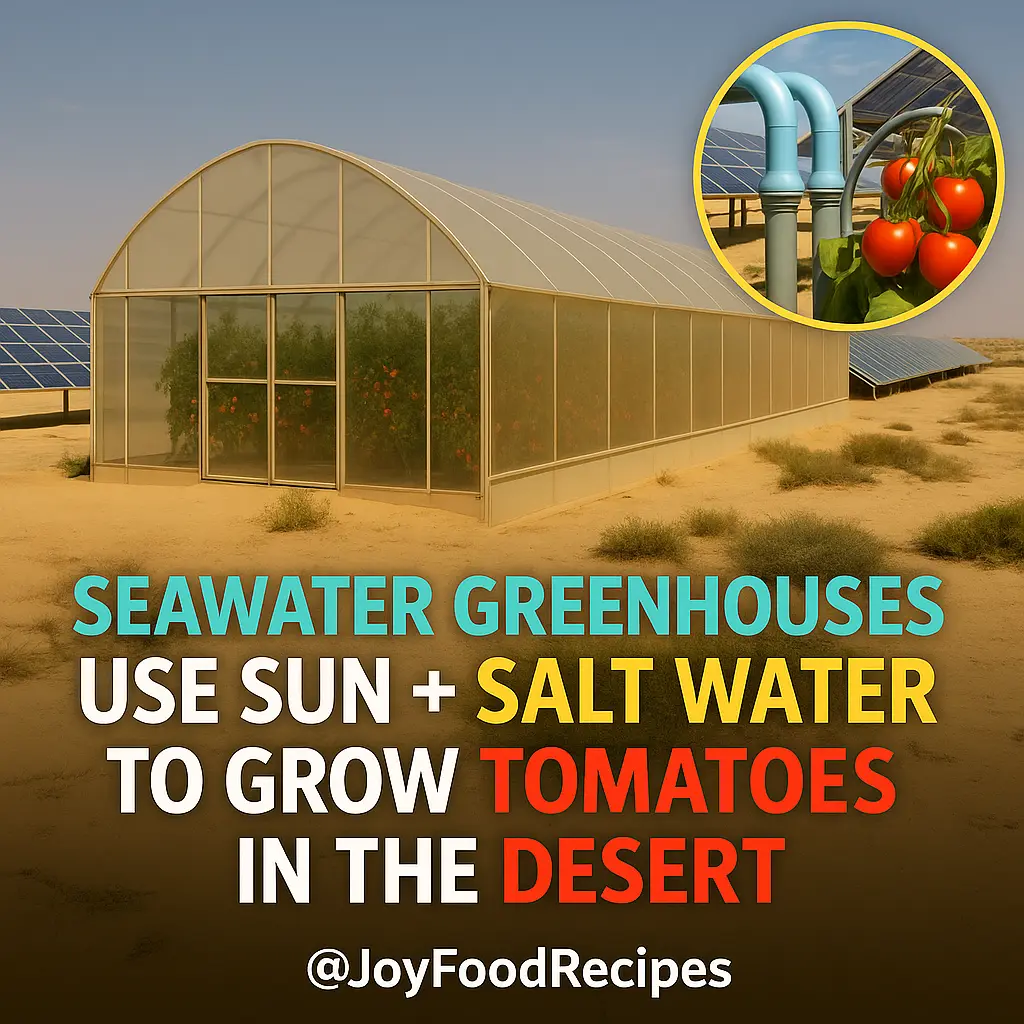
A few weeks ago, my cousin sent me a photo from his trip abroad. It was a giant glass greenhouse… in the middle of the desert. Inside? Bright red tomatoes. I thought he was joking. Turns out, he wasn’t – and it completely changed how I look at where our food can come from.
I got curious (okay, obsessed) and looked into it. Could we really grow food using saltwater and sunlight in places where it rarely rains?
Let’s explore this wild idea together – because it’s not just fascinating. It could reshape how we grow and share food in the future.
What Is a Seawater Greenhouse?
Imagine a regular greenhouse – but one that doesn’t need fancy pipes or endless gallons of fresh water. Instead, it uses saltwater from the ocean and the power of the sun.
In places like coastal deserts (think: hot, dry, little rain), seawater greenhouses are built near the shore. They pull in salty water, use solar energy to cool the inside air and turn the water into fresh, plant-friendly water. Then the process kicks in. Tomatoes, cucumbers, herbs, and more start to thrive where barely anything grew before. This isn’t science fiction. It’s already happening – in parts of Australia, the Middle East, and Africa.
How Does It Actually Work?
Okay, here’s the simple version. No technical stuff, just the cool part:
- They bring in saltwater. This comes straight from the ocean nearby.
- The sun helps evaporate the water. Kind of like how puddles dry up in the summer. But in these greenhouses, the water vapor is collected instead of lost.
- That vapor turns into freshwater. The clean water is then used to water the plants.
- Meanwhile, the air inside stays cool. Thanks to damp pads and smart airflow, it feels way more like spring than a desert.
So instead of needing rain or underground water, these greenhouses make their own fresh water using sunlight and sea. Pretty clever, right?
Tomatoes in the Sand? Yep – and They’re Tasty, Too.
Let’s talk tomatoes. Why do we keep seeing them in photos of these greenhouses?
First off, tomatoes are picky. They love warmth, but they hate too much heat. They need regular water but not soggy soil. And they really need protection from harsh weather. Seawater greenhouses give them all that.
So when you see rows of juicy red tomatoes growing where nothing else survives, it’s not just a pretty sight – it’s a small miracle of smart design and timing.
And yes, I found out people have tasted these tomatoes – and they say they’re just as flavorful (sometimes even better) than the ones grown in more traditional places. Think rich, sweet, slightly tangy.
Why This Matters (Even If You’re Not a Farmer)
I’m not a farmer. I don’t live near a desert. Maybe you don’t either. So why care?
Here’s why: as the world changes, we need more flexible, smart ways to grow food. In some places, the land is drying up. In others, fresh water is getting harder to find. Seawater greenhouses offer a way to add land to our farming map – without draining rivers or overworking soil.
This could help bring more local produce to places that usually have to ship it in from far away. It could even help communities grow their own food, stay independent, and worry less about shortages. Plus, it’s just… inspiring. Turning saltwater and sunshine into a tomato salad? That’s hope on a plate.
Can You Try Something Similar at Home?
While you probably can’t build a seawater greenhouse in your backyard (unless you’ve got an ocean, a solar panel system, and a small construction crew), you can take inspiration from it. Here are some friendly, doable ideas:
- Grow with less water. Try drip irrigation or a self-watering planter. It mimics how efficiently these greenhouses use water.
- Start a small greenhouse. Even a mini one helps protect your plants and lets you control the conditions more.
- Get curious about where your food comes from. The next time you’re shopping, look for tomatoes or produce from places experimenting with sustainable farming.
When we learn about these things, even in small ways, we become more connected to our food – and that’s always a good thing.
Final Thoughts: Growing Food, Growing Hope
I started this journey surprised by a single photo. Now, I’m honestly amazed by what’s possible.
These seawater greenhouses aren’t just about tomatoes – they’re a gentle reminder that innovation and nature can work together. That even in dry, sun-baked corners of the world, we can still grow something fresh, bright, and full of flavor.
So the next time you slice into a ripe tomato, maybe take a second to appreciate the journey it might’ve taken – maybe even from the desert. And who knows? Maybe one day, we’ll see more of these salty-sunny gardens closer to home.