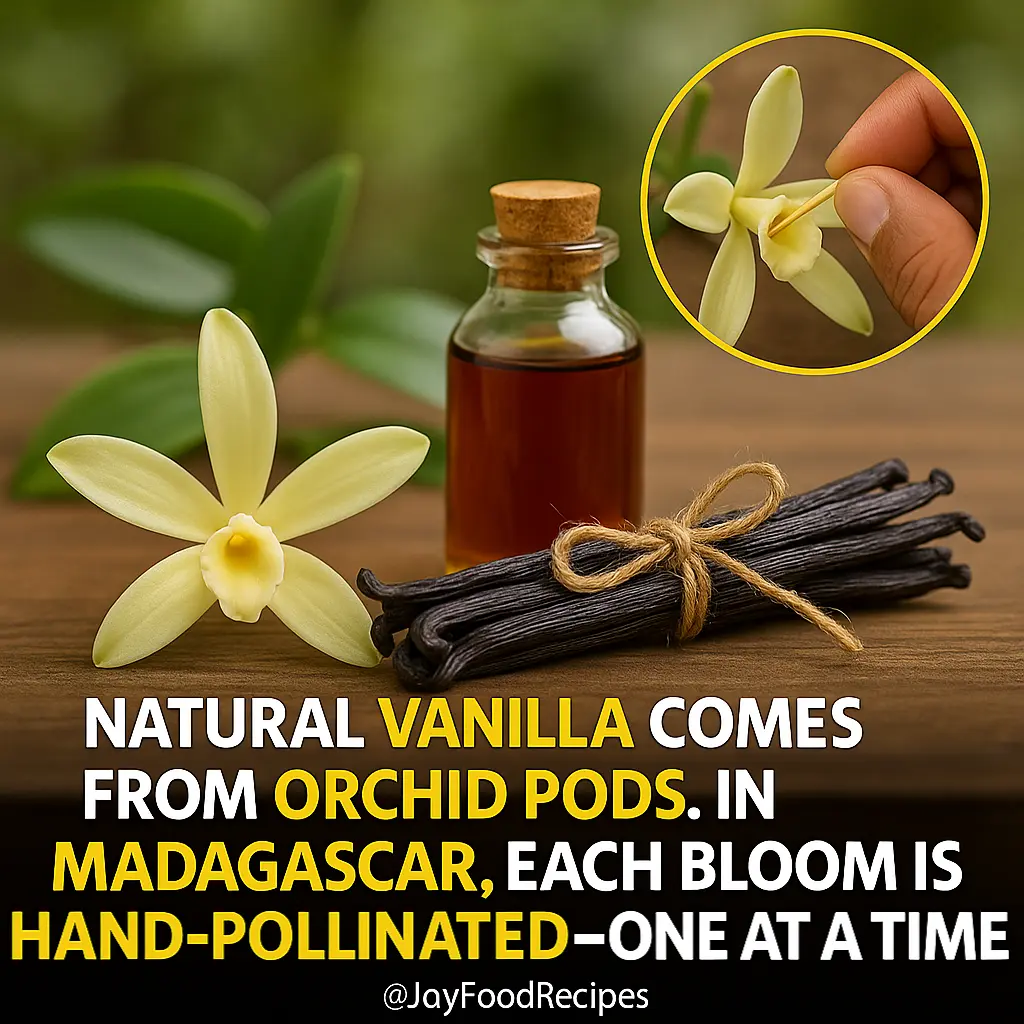
I’ll never forget the look on my cousin’s face when I told her vanilla comes from an orchid. “Wait, vanilla? Like the kind in ice cream?” she said, blinking like I’d just told her chocolate was a vegetable. And when I explained that each flower only blooms for about a day and has to be pollinated by hand, she looked completely stunned.
To be honest, I was surprised when I first learned that too. We use vanilla so casually – drizzling it into cookie dough or stirring it into whipped cream – but we rarely think about where it comes from or how much work it takes to produce even a small bottle.
So let’s explore the fascinating story behind real vanilla, especially the kind grown in Madagascar. You’ll never look at vanilla extract the same way again – and you might just appreciate that next scoop of ice cream a little more.
What Is Vanilla, Really?
Vanilla isn’t just a flavor – it’s a tropical orchid. And not just any orchid, but one of the only orchids in the world that produces something edible. The plant is called Vanilla planifolia, and its flowers are pale greenish-yellow with a delicate, star-like shape.
But here’s the thing: the part we use – the vanilla bean – isn’t a bean at all. It’s a long, slender pod that grows after the orchid is pollinated. Inside are thousands of tiny seeds and a sticky, aromatic resin that holds all that sweet, familiar flavor.
Sounds pretty special, right? But that special flavor doesn’t happen on its own.
The Flowers Only Last a Day
Vanilla orchids bloom just once a year – and each individual flower opens for only one day. That means farmers have a tiny window of time to pollinate it before it wilts.
In the wild, only a specific bee in Mexico can pollinate vanilla flowers. But outside of that region, those bees don’t exist. So in places like Madagascar, where 70–80% of the world’s vanilla comes from, farmers have to do it themselves. One flower at a time. By hand.
Imagine waking up before sunrise, walking through rows of climbing vines, and gently lifting each delicate flower to perform this task with a toothpick or small stick. It’s incredibly precise. If the flower isn’t pollinated that day, no vanilla pod will grow. It’s a race against time.
Why Madagascar Vanilla Is So Special
Madagascar is the world’s top producer of natural vanilla, and it’s not just because of the climate. The island’s humid weather and rich soil help the vines thrive, but it’s the farmers’ skill that makes the biggest difference.
Many of them have been doing this for generations. They learn from family members how to spot the right moment to pollinate, how to care for the vines, and how to cure the pods afterward to bring out that deep, rich flavor we all love.
Vanilla pods from Madagascar have a creamy, warm aroma with subtle hints of spice and floral notes. It’s why they’re so prized by bakers and chefs around the world. But the process doesn’t stop after pollination…
The Long Road from Flower to Flavor
Once a flower is pollinated, it takes about 9 months for a vanilla pod to fully mature. After harvest, the pods go through a multi-step curing process that can last several more months. Here’s a quick look at what that involves:
- Blanching: The pods are briefly dipped in hot water to stop them from ripening too fast.
- Sweating: They’re wrapped and stored in wooden boxes, where they sweat and develop aroma.
- Drying: Then they’re laid out in the sun for a few hours a day and brought inside at night.
- Conditioning: Finally, the pods are kept in closed boxes to rest and deepen in flavor.
By the time they reach your kitchen, each pod has been cared for by hand for almost a year.
Why Real Vanilla Is So Expensive
You might’ve noticed that a small bottle of pure vanilla extract can feel surprisingly pricey for its size. Now you know why. It’s not just the rarity of the flower – it’s the labor.
Every step, from pollination to drying, is done by hand. There’s no machine that can replace it. And if there’s a storm or drought during the flowering season? The whole crop can be lost.
That’s why many commercial products use artificial vanilla flavor (called vanillin). It’s cheaper to make in a lab. But if you’ve ever compared the two side by side – real vanilla vs imitation – you’ll taste the difference. One is flat and one is full of depth, warmth, and complexity.
How You Can Try It at Home
If you’re curious, try getting your hands on a whole vanilla pod. You can split it open with a knife and scrape out the tiny black seeds inside. Add them to custards, whipped cream, or cake batter – you’ll get that rich, speckled look and a deep flavor boost.
Or try steeping a pod in warm milk or cream for hot chocolate. It’s subtle, comforting, and feels a little luxurious.
If you bake often, buying pure vanilla extract (made from real vanilla beans) is worth the splurge. A little goes a long way, and you’ll be supporting a farming tradition that’s as delicate as the orchid itself.
The Heart Behind the Flavor
Real vanilla isn’t just an ingredient – it’s a labor of love. From the one-day bloom to the months-long drying process, it’s a reminder of how much care and effort goes into the little things that bring joy to our tables.
So next time you swirl vanilla into a batter or spoon it into your coffee, think of that flower in Madagascar, and the hands that gently helped it bloom.
Because sometimes the simplest flavors have the most extraordinary stories behind them.